Views: 0 Author: Site Editor Publish Time: 2026-06-07 Origin: Site


Automotive interior manufacturing operates under incredibly high stakes. Genuine leather remains one of the most expensive raw materials in auto production today. Consumers expect flawless seats, perfectly wrapped steering wheels, and seamless door panels. Even minor cutting inefficiencies will severely impact your profit margins. Wasting premium cowhide is simply not an option for competitive suppliers.
Unfortunately, legacy cutting systems simply cannot keep up with modern manufacturing demands. Standard desktop cutters lack the sheer power needed to slice through thick hides reliably. Traditional die-cutting clicker presses demand costly physical molds for every single design change. Furthermore, laser cutters scorch natural hides. They leave burnt, hardened edges that ruin stitching and compromise the final hand-feel.
How do you navigate these complex hardware challenges? This article provides a vendor-agnostic, technical evaluation framework. It is specifically tailored for Tier 1 and Tier 2 suppliers, as well as specialized upholstery shops. We will help you select an industrial-grade Automotive Leather Cutting Machine. You will learn how to evaluate equipment based on material yield, production scale, and workflow efficiency.
Oscillating Knives Trump Lasers: CNC vibration/oscillating knives eliminate noxious fumes and burnt edges, ensuring clean seams for high-end car upholstery cutting.
Software Equals ROI: AI-driven leather nesting and high-res defect recognition can increase material utilization by 3–5%, offering a measurable payback period.
Workflow Determines Throughput: Look for "tandem setups" (dual-zone processing) that allow continuous cutting without machine downtime for loading/unloading.
Application Specificity Matters: Processing thick car seat leather requires different machine specs than cutting synthetic microfiber or looped car mats.
Traditional manufacturing floors often rely on outdated equipment. These older methods create massive bottlenecks when scaling production. Let us examine the true cost of die cutting first. Clicker presses are undeniably fast for repetitive, identical tasks. However, steel dies lack basic flexibility. Automotive trends shift rapidly. New car seat designs or custom interior requests require custom molds. You must manufacture these molds physically. You must warehouse them. This incurs heavy storage costs and significantly delays your time-to-market.
Many factories attempt the laser cutting compromise. Lasers seem precise, but they fail completely on natural hides. Lasers cut using concentrated heat. They literally burn the collagen fibers in the leather. This creates rigid, hardened edges along the cut line. Sewing needles snap against these stiff perimeters. The final stitch quality suffers immensely. Additionally, burning leather generates unacceptable noxious fumes. Your factory floor will require expensive, heavy-duty ventilation systems to remain safe.
The CNC oscillating knife advantage solves these critical issues. CNC blade technology represents the modern industry standard. Specifically, electric and pneumatic oscillating tools handle thick hides flawlessly. They slice cleanly without generating heat. They require zero physical molds. You simply upload a new digital design, and the machine adapts instantly to CAD file changes. This agility dominates high-end car upholstery cutting.
Cutting Method | Tool Flexibility | Edge Quality on Leather | Primary Drawback |
|---|---|---|---|
Die Cutting (Clicker) | Extremely Low | Clean and precise | High physical mold costs and slow design updates. |
Laser Cutting | High | Burnt, hardened, discolored | Ruins stitching process and emits toxic fumes. |
CNC Oscillating Knife | Extremely High | Clean, soft, unaltered | Requires initial setup and operator training. |
Selecting the right machinery requires a strict look at hardware specifications. You must match the equipment to the physical reality of genuine hides. Cutting area and hide capacity form your first priority. Genuine cowhides average around 60 square feet. A production-grade machine must feature a massive flatbed. It must be large enough to process full hides seamlessly. Pre-cutting leather into smaller chunks wastes material. It also destroys your continuous workflow.
Next, evaluate the tool configurations for multi-tasking. Automotive parts rarely require just one simple cut. The ideal setup features dual-beam asynchronous heads. This advanced engineering allows the machine to perform multiple operations simultaneously. For example, one cutting head slices the outer perimeter of a seat panel. At the exact same time, a secondary tool punches intricate perforation holes for ventilated seats. This dual-action slashes production time dramatically.
Finally, inspect the vacuum fixation technology. Natural leather is notoriously uneven. It features belly areas that curl and warp. You need a multi-zone vacuum adsorption platform. Dynamic vacuum zones pull the porous material flat against the cutting bed. They adjust suction power based on where the tool operates. This keeps the hide perfectly rigid. It guarantees strict dimensional accuracy during high-speed routing.
Best Practice Checklist for Hardware:
Verify the flatbed easily accommodates a full 60 sq ft hide without overhang.
Ensure the cutting head supports easy tool swapping for punching and routing.
Check the vacuum pump wattage. Underpowered vacuums allow material shifting.
Confirm the machine frame utilizes heavy-duty steel to prevent high-speed vibration.
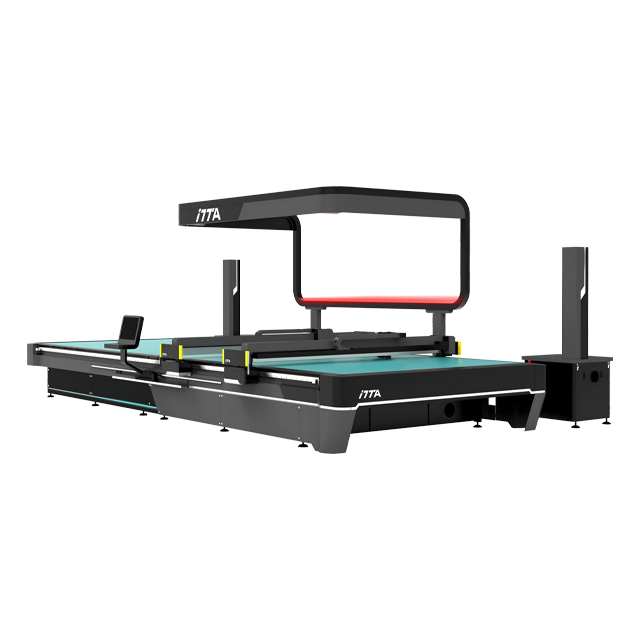
Hardware provides the muscle, but software delivers the profit. Natural materials carry inherent flaws. Cowhides have natural scars, insect bites, stretch marks, and highly irregular perimeters. You cannot use these damaged sections for premium seating. Look for machines integrated with high-resolution line-scan cameras or overhead projection systems. These advanced optics map the hide instantly. They highlight unusable areas before any blades touch the material.
This is where AI-driven intelligent nesting takes over. Human operators take a long time to arrange patterns manually. They get tired and make spatial errors. Advanced leather nesting algorithms handle this mathematically. The system automatically arranges digital patterns around marked defects. It rotates panels to align precisely with the natural grain direction of the hide. Remarkably, modern software completes this complex layout puzzle in under two minutes.
Do not view this software as a mere accessory. Frame it as your primary cost-saving mechanism. The financial impact becomes obvious quickly. High-end automotive leather costs a premium per square foot. Improving material utilization by just 3–5% saves thousands of dollars annually. You reduce your scrap bins significantly. This digital efficiency drives rapid returns on your initial equipment investment.
Automotive cabins consist of diverse materials and components. A single cutting tool cannot handle every distinct part. You must evaluate how the machine specs align with specific interior applications. Large-panel components demand robust power. Car seats and expansive door panels fit this category. Processing these parts requires heavy-duty multi-layer cutting capabilities. You need high-stroke pneumatic oscillating knives. These blades slice cleanly through up to 8–15 layers of car seat leather cutting material or synthetic foam composites without jamming.
Small-panel and complex components require a totally different approach. Think about steering wheel wraps and gear shift boots. These items demand extreme precision over brute force. Steering wheels require incredibly tight tolerances for manual hand-wrapping. Contour recognition systems become critical here. The machine's cameras read printed markers on the leather. Projection previews overlay the cut path onto the material. Operators verify the exact placement before executing the cut.
Furthermore, specialty and safety materials broaden your production scope. Modern automotive interiors encompass vastly more than just leather. Safety is paramount. Airbags utilize specialized woven fabrics with strict zero-fray tolerances. Floor spaces feature tough silk loop mats and multi-layered acoustic dampening foams. Ensure your chosen machine allows rapid tool head swapping. You must switch from a heavy pneumatic knife to a specialized rotary blade quickly. This adaptability keeps your production lines agile and responsive.
Common Mistake: Buying a machine optimized only for thick veg-tan leather, then struggling to cut soft, stretchy microfiber or acoustic foam. Always demand versatile, modular tool heads.
A fast machine means nothing if it sits idle. How the equipment integrates into your daily factory workflow dictates your actual throughput. Focus on continuous operation models. Evaluate machines that feature a "tandem setup". These systems divide the massive cutting bed into independent operational zones. True leather automation reaches peak efficiency here. The machine actively cuts patterns on the left side of the bed. Meanwhile, an operator safely unloads and sorts finished parts on the right side. This alternating rhythm eliminates machine downtime entirely.
We recommend implementing the three-zone assembly line model. This creates a highly organized factory floor. It prevents bottlenecks at the machine bed. Outline this strategy for your facility:
Inspection Zone: Operators spread the hide. Cameras capture the perimeter. Workers digitally mark natural hide defects using interactive styluses.
Cutting Zone: The machine takes over completely. It executes automated CNC routing, high-speed punching, and perimeter slicing autonomously.
Collection Zone: The system utilizes overhead projectors. It projects part names and barcodes directly onto the cut pieces. Workers sort them rapidly for the sewing department.
Never ignore the power of data traceability. Modern industrial systems do more than just cut. They function as data-gathering nodes. They automatically log daily material usage. They record your exact scrap rates per hide. They generate daily output reports. Management reviews this data to track manufacturing efficiency. You can calculate the exact material cost per individual car seat. This transparency transforms how you bid on future automotive contracts.
Transitioning to automated industrial equipment represents a significant operational upgrade. You must justify this move by looking beyond just the machine's speed. Look closely at vendor support and part availability. Automotive production runs on extremely tight schedules. You cannot afford extended machine downtime. Evaluate your potential vendors based on local technician availability. Ask about their inventory of consumable blades and belts. Check their software update policies. A responsive vendor acts as an extension of your own maintenance team. They keep your production lines moving during peak shifts.
Your next step should always involve concrete testing. Never purchase a machine based purely on a brochure. Advise your engineering team to request a live "Sample Cut". Better yet, demand a comprehensive Time Study. Send the vendor your own specific CAD files. Ship them samples of the exact leather grades you use daily. Force them to process your files on their machine. Verify the actual cycle times. Inspect the edge quality of the returned leather pieces personally. This physical proof guarantees the equipment performs as promised under your specific manufacturing conditions.
Transitioning to a high-end CNC leather cutter is a powerful strategic move. It upgrades your facility from slow manual craftsmanship to scalable, data-driven manufacturing. You eliminate the rigid constraints of steel dies. You bypass the destructive thermal damage of laser systems.
Remember this final thought: the "best" machine is not necessarily the fastest one. The true winner is the machine that offers the highest material yield. It provides the most reliable continuous workflow. It delivers the flexibility to adapt to rapidly evolving automotive design trends seamlessly.
Take action today to modernize your production floor. Contact a specialized sales engineer to discuss your specific interior applications. Schedule a custom material test cut and see the precision of oscillating CNC technology firsthand.
A: Yes, provided it uses a high-stroke electric or pneumatic oscillating tool (EOT). This advanced tool is specifically designed for thick, tough leathers like veg-tan. It easily outperforms standard desktop drag-knife cutters by utilizing high-frequency vertical sawing motions.
A: Lasers use intense heat. This scorches the leather, creates noxious smells, and leaves a hardened edge. Sewing needles struggle to penetrate this rigid perimeter. Oscillating blades cut cleanly with zero thermal damage, preserving the material's natural softness.
A: Industrial systems designed for full hides typically require a footprint slightly larger than a single bed. Expect dimensions around 3x2 meters or more. You must also calculate and provide adequate operational clearance for safe material loading and unloading.
A: Yes. By mathematically interlocking irregular shapes and automatically avoiding marked defects, AI nesting consistently outperforms human layout. It typically reduces overall material waste by 3% to 5% per hide, saving thousands of dollars over time.