Views: 0 Author: Site Editor Publish Time: 2026-06-17 Origin: Site


The footwear manufacturing landscape faces severe pressure today. Rising labor costs, shrinking margins, and global supply chain shifts demand higher output. Strategies like the "China+1" approach force factories to maximize resources while expanding across new regions. A single shoe often contains 20 to 30 components across up to 14 sizes. This creates exponential SKU complexity on the production line. Traditional die-cutting methods simply cannot keep pace. Factories need rapid iteration and better material optimization to survive in a highly competitive market. We provide a clear, evidence-based framework for evaluating modern cutting systems. You will learn how upgrading to a digital Shoes Leather Cutting Machine impacts operational efficiency. We will also explore its effect on material yield and long-term production profitability.
Die-Less Agility: Transitioning to CNC/digital cutting eliminates physical die costs and accelerates prototyping.
Material Yield: Automation in footwear leather cutting can reduce raw material waste, directly lowering production costs by an estimated 15–20%.
Precision & Quality: Advanced optical and digital systems achieve 0.1mm cutting precision, drastically reducing assembly errors downstream.
Material-Specific Workflows: Genuine leather requires interactive nesting to account for natural stretch lines, whereas synthetic materials can be fully automated.
Industry data shows 90% of production errors stem from miscommunication. Design specification mismatches cause severe assembly bottlenecks on the factory floor. Each shoe variant involves dozens of components. These include outsoles, inner linings, uppers, and heel counters. Manual tracking fails quickly under this exponential complexity. Managing 14 different sizes multiplies the daily management challenge. Traditional factories struggle to maintain consistent quality across all active SKUs.
Swing-beam presses rely entirely on heavy physical dies. High tooling costs erode profit margins quickly. This remains especially true for low-volume runs or custom orders. Manual die placement creates inconsistent material utilization. Human operators cannot optimize every layout perfectly by eye. Furthermore, adapting to design changes takes too much time. Waiting for new physical dies causes significant production delays.
Traditional manual output metrics fall short of modern standards. Historically, an operator might produce the equivalent of 4 to 6 pairs daily. Today, factories must triple or quadruple this per-capita output. Global competition requires faster turnaround times and leaner operations. Modern footwear manufacturing demands a major shift away from heavy manual labor. Without robust automation, scaling production becomes financially impossible.
High physical tooling costs penalize every minor design iteration.
Inconsistent material usage occurs due to manual die placement.
Severe delays happen during early prototyping and pattern grading.
Heavy reliance on skilled manual labor caps maximum factory output.
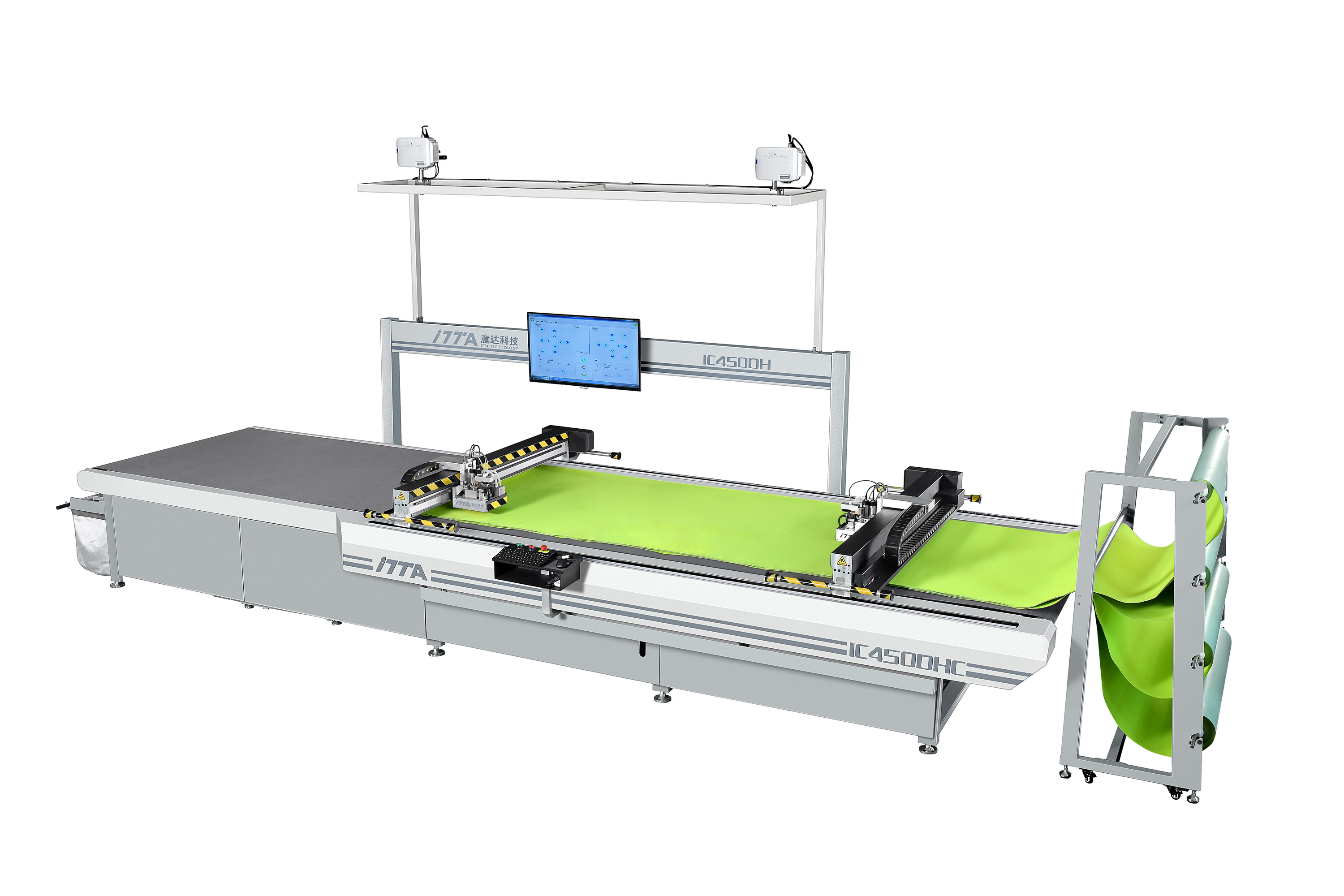
Transitioning to die-less cutting changes everything for a factory. CAD/CAM integration enables direct 2D or 3D model-to-machine execution. You no longer wait weeks for physical dies to arrive. Development cycles drop from several weeks to mere days. This agility helps brands launch new seasonal collections much faster.
Manual cutting often introduces slight human errors during a long shift. Advanced machines maintain strict 0.1mm accuracy consistently. This level of cutting precision ensures every individual component fits perfectly. Perfect fit reduces downstream lasting and sewing defects to under 1%. Superior shoe upper cutting guarantees a clean, professional finish every time.
Leather remains an exceptionally expensive raw material. Intelligent nesting algorithms optimize layout patterns automatically. They can increase direct material efficiency by 3 to 4%. This slight percentage increase yields massive financial savings over a production year. Optimizing material yield remains a critical success metric for premium shoe brands.
Modern production also requires constant monitoring and adjustments. Automated cutters integrate IoT bridges seamlessly into their control software. These systems track Overall Equipment Effectiveness (OEE) in real-time. Managers can spot and prevent production bottlenecks before they happen. Data-driven insights completely replace guesswork on the busy factory floor.
Genuine leather presents unique manufacturing challenges. It possesses natural flaws, variable texture qualities, and distinct stretch lines. Industry experts refer to these directional stretches as the "lines of tightness." We must respect these variations during production. If operators ignore them, the final shoe will warp or fit poorly over time.
Blind auto-nesting software lacks vital human intuition. It may mistakenly place critical shoe components on inferior leather sections. For example, the shoe toe requires very tight, premium hide to withstand lasting. A fully automated system might position it over a weak flank area. This ruins product quality and wastes highly expensive material.
We highly recommend interactive digital cutting systems for natural animal hides. Human operators assess the hide visually before cutting begins. They work alongside digital projection tools to guide the software. This hybrid approach ensures optimal quality and material layout. It successfully balances digital speed with essential artisan judgment.
Synthetic fabrics and recycled plastics behave quite differently. They possess uniform textures and contain no natural flaws. Here, full auto-nesting offers maximum return on investment. Multi-ply cutting speeds up the entire assembly process significantly. Effective footwear leather cutting depends entirely on accurately assessing the material type first.
Comparison: Genuine Leather vs. Synthetic Materials | |||
Material Type | Key Characteristics | Ideal Nesting Approach | Cutting Speed Profile |
|---|---|---|---|
Genuine Leather | Natural flaws, stretch lines, variable thickness | Interactive / Hybrid Nesting | Moderate (Requires manual QC steps) |
Synthetic Fabrics | Uniform texture, consistent quality, highly predictable | Fully Automated Auto-Nesting | High (Multi-ply stacking supported) |
Evaluate the machine for dedicated multi-head functionality. Can the system perform cutting, punching, and marking in one pass? Versatile tooling drastically reduces material handling times. Edge quality serves as another vital hardware factor. Clean cuts prevent bulky seams during the later skiving and stitching phases. Smooth edges ensure a superior final assembly and higher customer satisfaction.
Hardware alone cannot transform your factory operations. The software ecosystem plays an equally critical role in production. The machine must integrate seamlessly with existing BOMs (Bill of Materials). Prepack planning systems also require seamless synchronization. This connectivity coordinates material requirements across highly complex production orders. It directly prevents severe material shortages on the final assembly line.
Digital machines require a notable initial capital expenditure (CapEx). However, you must evaluate this against long-term operational savings. Advanced leather automation offsets CapEx surprisingly fast. You eliminate physical die manufacturing and die storage costs entirely. Reduced labor overhead and minimized material waste accelerate payback periods. Most mid-to-high volume manufacturers see strong ROI within 12 to 24 months of installation.
Common Mistake: Many factory managers evaluate equipment solely on the initial sticker price. They often forget to factor in the hidden, recurring costs of physical die maintenance, die storage real estate, and scrap material disposal. A comprehensive ROI model must capture these eliminated expenses.
Technology remains only as good as the operator running it. Hardware upgrades require skilled personnel to maximize daily output. Comprehensive workforce training stands as an absolute necessity. Studies show thorough training boosts operational efficiency by up to 20% post-installation. Do not treat operator training as a minor afterthought.
Routine maintenance remains non-negotiable for high-tech machinery. Teams must clean optical lenses and lubricate moving parts daily. Checking emergency sensors consistently ensures safe operation. Strict maintenance protocols extend overall machine lifespan by 25%. Industry data also confirms a 15% reduction in unexpected downtime.
Best Practices for Predictive Maintenance:
Establish strict daily cleaning schedules for cutting beds and optical sensors.
Lubricate moving mechanical parts weekly to prevent excessive friction wear.
Run standard diagnostic tests on all safety sensors before every major shift.
Schedule required software updates only during planned downtime windows.
Factory environments heavily impact machine performance and longevity. You must maintain strict dust-free zones around cutting equipment. Excessive leather dust blinds sensitive optical sensors quickly. Automated quality control vision systems fail completely when obscured by airborne debris. Proper climate control also prevents natural leather from warping before cutting occurs.
Adopting a digital shoe cutting system is no longer a luxury. It serves as a strict baseline requirement for scaling production efficiently. Automation bridges the gap between rising global labor costs and aggressive market demands. Facilities that fail to modernize will struggle to remain competitive.
Actionable Next Steps:
Audit your current physical die costs and die storage expenses over the last fiscal year.
Calculate your exact material waste percentages across various footwear product lines.
Categorize your production materials clearly between genuine hides and synthetic alternatives.
Use this compiled data to shortlist equipment vendors who offer robust software integration.
A: A digital cutter typically improves material yield by a minimum of 3 to 4%. By utilizing optimized digital nesting software, factories can reduce overall direct material costs by 15 to 20% annually. This drastically improves profit margins on high-volume runs.
A: Yes, but it requires interactive projection systems. Operators must visually assess the hide and manually adjust the digital nesting. This ensures the cut avoids natural flaws and properly respects the leather's natural stretch lines.
A: The exact timeline depends heavily on your production volume. However, eliminating physical die costs, reducing manual labor, and minimizing material waste typically drives a full return on investment within 12 to 24 months for mid-to-high volume manufacturers.