Views: 0 Author: Site Editor Publish Time: 2026-06-24 Origin: Site


Shifting from traditional leather processing to digital systems is no longer a mere technology upgrade. It is a mandatory operational shift. Manufacturers must adopt it to survive shrinking product lifecycles and severe skilled labor shortages. Cutting natural leather presents unique complexities. You deal with unpredictable consistencies, natural flaws, and exceptionally high material costs. Manual methods simply cannot optimize these variables reliably.
By deploying smart manufacturing systems, factories address these inconsistencies mathematically rather than manually. Algorithms calculate the absolute most efficient layout. Machines execute the cuts without fatigue or variation. This comprehensive guide evaluates the commercial applications, core technical modules, and implementation risks of modern digital systems. We also break down the quantifiable financial return of deploying a commercial Digital Leather Cutting Machine in your modern production line.
Die-less Agility: Transitioning to digital CNC cutting eliminates physical tooling costs, enabling profitable short-run and custom production.
Material Maximization: AI-driven nesting and optical flaw detection reliably push natural leather utilization rates to 85% or higher.
Clean Output: Unlike laser alternatives, oscillating blade technology ensures zero edge burning and eliminates toxic fume compliance risks.
Predictable ROI: Based on 2026 market benchmarks, commercial-grade systems range from $9,000 to $25,000+, with typical payback periods of 6 to 12 months when factoring in material savings and throughput gains.
You must define the exact operational pain points causing margin erosion. These triggers justify moving away from manual or legacy cutting. Decision-makers should treat the following scenarios as exact evaluation criteria for upgrading their facility.
Examine your current scrap bins. Manual nesting often yields excessive offcuts. Natural leather variability makes manual optimization nearly impossible at scale. Every animal hide features distinct stretch directions, belly areas, and spine stiffness. Human eyes simply miss optimal interlocking geometric shapes across hundreds of parts. When raw leather costs soar, discarding 25% of a hide directly destroys profitability. You need computational layouts to minimize this severe material bleed.
Modern consumer demand shifts rapidly. Traditional hydraulic die presses fail under these new market conditions. They cannot accommodate rapid prototyping or frequent design changes. Producing new physical metal molds incurs prohibitive tooling costs. It also adds weeks to your lead times. If a brand requests a limited 50-piece capsule collection, creating custom dies wipes out the entire profit margin. Digital processing removes physical tools entirely, allowing you to cut a new design the second you approve the file.
Relying heavily on individual operator skill poses serious business risks. Complex edge geometries demand perfect execution on every single piece. Over a standard eight-hour shift, manual workers naturally experience physical fatigue. This fatigue causes dimensional drift and cutting errors. We strongly advocate for leather automation as a stabilizing operational factor. It completely removes human variability from the cutting equation. The first cut of the morning matches the final cut of the evening perfectly.
Best Practice: Track your exact material scrap rate for two straight weeks before contacting equipment vendors. You need this hard baseline to calculate your future return on investment accurately.
You need an objective, skeptic-friendly comparison of available technologies. This builds internal consensus and ensures you select the right tool for the job. We avoid bashing older methods. Instead, we focus on exact use-case fit.
Die presses hold immense value for high-volume, static designs. If you produce millions of identical standard belts, die cutting remains incredibly fast. However, they suffer from extreme operational rigidity. High mold storage costs eat up valuable warehouse space. Metal dies eventually dull and require expensive sharpening or replacement. Ultimately, they remain entirely unsuitable for modern custom orders or agile fashion lines.
Laser cutting offers remarkably high precision. They cut intricate lace-like patterns flawlessly. Yet, we must forcefully address their critical limitations for natural animal hide. Lasers burn the material. They scorch and discolor light-colored edges. The intense heat literally cooks the protein in the hide, hardening the cut path. This ruins the leather's natural, premium feel. Furthermore, lasers require strict environmental compliance. You must install heavy-duty extraction units to filter out the highly toxic smoke produced during processing.
The modern oscillating blade positions the digital cutter as the superior middle ground. It relies on cold-cutting technology. Absolutely no thermal damage occurs to the material edges. It delivers complete die-less flexibility. You simply load a new vector file to change products. Furthermore, it adapts effortlessly to varying material densities, cutting soft suede and thick saddle leather with equal precision.
Technology Showdown: Leather Cutting Solutions | |||
Technology Type | Best Fit Scenario | Critical Limitations | Agility / Flexibility |
|---|---|---|---|
Hydraulic Die Press | Mass production of identical static shapes | Prohibitive mold costs, slow prototyping | Very Low |
CO2 Laser Cutter | Intricate textiles, acrylics, non-leather | Scorched edges, toxic fumes, material hardening | High |
CNC cutting (Oscillating Blade) | Agile fashion, custom automotive, prototyping | Initial software learning curve, file prep needs | Maximum |
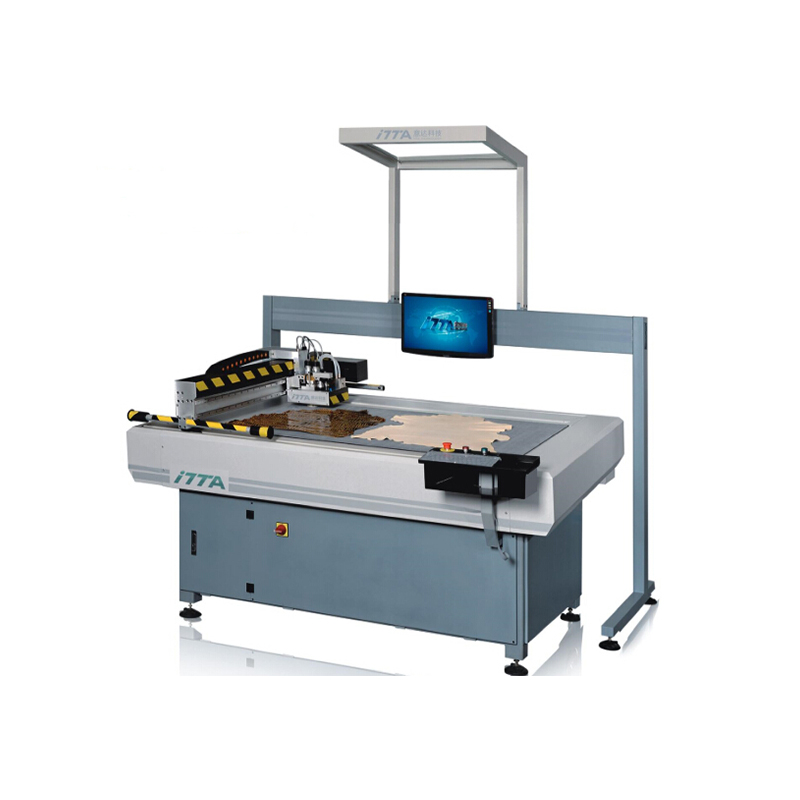
Let's break down the machine into specific high-performance modules. We will skip generic marketing features and show exactly how the technology functions on the factory floor.
Natural leather is imperfect. Overhead cameras and high-lumen projection systems actively assist operators in managing these imperfections. These optical systems project the digital cut layout directly onto the physical hide resting on the table. Operators visually inspect the hide for natural defects like scars, branding marks, or tick bites. Using a digital pen or mouse, they mark these bad zones. The system instantly recalculates the layout, routing the cut path safely around the damaged areas.
Securing breathable, irregular leather hides requires massive, distributed suction. Multi-zone vacuum tables typically pull 12kW to 15kW of power. They feature dozens of individually controlled zones. They hold the material perfectly flat against the cutting surface without using any mechanical clamping. Clamps cause bunching and distortion. A zoned vacuum ensures the hide remains totally immobile during aggressive high-speed cuts.
Hardware is useless without powerful software. Intelligent algorithmic nesting fundamentally alters the material yield equation. The software tests thousands of geometric layouts per minute. It shrinks the safety buffer between cut parts down to a mere 0.1mm to 1mm. Human operators cannot safely cut parts that close together without crossing lines. Software handles this effortlessly, squeezing extra parts out of every single hide.
High-end industrial systems utilize swappable tool configurations. You do not buy a machine with just one blade. The universal head supports multiple distinct tools simultaneously:
Electric Oscillating Tool (EOT): Saws rapidly up and down. Perfect for slicing through thick, dense cowhide without dragging the material.
Driven Rotary Tool (DRT): Uses a spinning decagonal blade. Ideal for rapidly slicing breathable fabrics, canvas, and soft textiles.
Marking and Punching Modules: Plots stitch holes, draws assembly lines with disappearing ink, or punches physical rivets in a single pass.
Evaluating intelligent cutting solutions requires a realistic, grounded financial framework. We base these numbers on active industry benchmarks for mid-sized manufacturers. You must understand how quickly the equipment pays for itself.
Artificial intelligence nesting algorithms generate immediate cash value. They typically increase raw material utilization by 12% to 20% over manual nesting. This technology stabilizes your total hide yield safely above 85%. Imagine processing 100 premium hides daily. Saving 15% means you effectively gain 15 free hides every single day. Over a month, this material savings alone often covers the monthly financing cost of the equipment.
Manual speeds simply cannot compete with servo-driven machine capabilities. Modern commercial systems achieve cutting speeds up to 1.5 meters per second. This delivers a 4x to 8x output multiple over hand-cutting, depending largely on part complexity. A worker might spend five minutes carefully cutting a complex handbag gusset. The digital system completes that same exact geometry flawlessly in twelve seconds.
Manufacturers standardly report a 6-to-12-month payback period. We tie this timeline explicitly to reduced raw material waste. Raw material remains the highest cost variable in leather goods production. Eliminating physical die-making costs further accelerates this financial return. You no longer pay machine shops to mill metal dies. You no longer pay shipping for dies. You no longer wait weeks to begin production.
Common Mistake: Do not calculate your payback period based solely on labor reduction. The true financial windfall comes from maximizing your material yield and launching products to market weeks faster.
You need transparent pricing tiers and rollout advice. This anchors your purchasing decision firmly in reality, preventing expensive mismatches between equipment capability and factory needs.
Machine costs vary wildly based on table size, feeding mechanisms, and software capabilities. Here is the current landscape:
Entry-Level ($6,000–$9,000): These machines feature static tables or half-automated feeding. They lack heavy-duty vacuums. They suit bespoke leather crafters, sample rooms, or niche automotive customizers perfectly.
Mid-Range ($9,000–$15,000): These offer fully automated conveyor feeding, multi-zone vacuums, and advanced AI nesting algorithms. They represent the absolute sweet spot for most mid-sized footwear, apparel, and accessory lines.
Industrial ($15,000–$25,000+): These boast heavy-duty continuous conveyor systems. They support multi-layer textile cutting alongside leather. They integrate seamlessly with broader factory ERP software. High-volume automotive interiors or commercial upholstery factories require this heavy-duty tier.
We must address the reality of technological adoption. Transitioning involves a definite learning curve. First, your operators must adapt to CAD software integration. Hand-drawn patterns must become clean digital vectors. Poorly drafted DXF files with open nodes or overlapping lines will inevitably crash the nesting software or yield poor physical cuts.
Second, facilities need consistent floor maintenance. You cannot neglect the hardware. You must clean vacuum filters weekly to maintain suction power. You must replace oscillating blades regularly. Cutting with a dull blade snags the leather fibers and ruins expensive hides. Fortunately, replacement blades cost mere dollars, making them a negligible consumable expense compared to metal dies.
A digital leather cutting machine serves as a critical operational investment in material efficiency. It provides essential supply chain agility. It represents far more than just a standard hardware purchase on the factory floor. By eliminating physical dies, maximizing hide yields, and ensuring perfect edge quality, manufacturers insulate themselves against rising raw material costs.
We advise all buyers to take actionable next steps before signing a purchase order. Request custom time-studies from your shortlisted vendors. Ask for detailed nesting yield reports. Always force vendors to run these test cuts using your exact leather hides and your specific DXF files. This guarantees the technology will perform properly in your actual production environment, securing your expected return on investment.
A: Yes, but it requires specific hardware. Premium systems use integrated cameras or overhead projectors. These tools allow the operator to visually inspect the hide and digitally mark flaws, scars, or thin spots. The intelligent nesting software then actively avoids these marked areas during the automated layout process, ensuring zero defective parts are cut.
A: Blade lifespan depends entirely on production volume, cutting speed, and leather density. In high-volume industrial environments cutting thick saddle leather daily, blades typically last a few days to two weeks. Routine blade replacement is extremely fast and represents a very minor consumable cost compared to traditional mold manufacturing.
A: Most digital cutting machines accept standard 2D vector files like DXF, PLT, or AI. The hardware itself usually comes bundled with proprietary CAM and nesting software to handle the machine instructions. However, buyers should always verify seamless integration with their existing 2D or 3D CAD design tools prior to purchase.