Views: 0 Author: Site Editor Publish Time: 2026-06-01 Origin: Site


Material costs for natural hides account for the highest percentage of operational expenses in leather manufacturing. Every percentage point of wasted material directly impacts your profit margins. Traditional manual or static digital nesting struggles heavily in this environment. You face the unpredictable nature of genuine leather every single day. Operators constantly deal with irregular perimeters, varying quality zones, and unavoidable natural defects.
Modern AI-driven solutions step in to solve this exact production bottleneck. They transition your operations from subjective manual placement to data-backed leather optimization. These intelligent systems systematically balance raw material yield against strict quality requirements. In this comprehensive guide, you will learn how modern algorithms instantly analyze hide variations. We will explore the technical mechanics behind advanced software and show you how to evaluate and implement these tools for measurable shop-floor success.
Upgrading to AI **leather nesting software** can yield measurable reductions in material waste, typically increasing utilization rates by 3% to 8% depending on baseline manual efficiency.
The integration of vision defect detection and **GPU nesting** algorithms allows for real-time, dynamic recalculations that manual operators cannot match.
Successful implementation requires evaluating not just algorithmic speed, but hardware compatibility, multi-quality zone mapping capabilities, and realistic operator adoption curves.
Unlike rolled synthetic textiles, natural hides lack uniformity. Synthetic rolls provide predictable dimensions and consistent quality from edge to edge. Genuine leather introduces biological chaos into the cutting room. Relying purely on human spatial reasoning leads to inconsistent yields. It also creates severe production bottlenecks. Human operators experience cognitive fatigue. As an eight-hour shift progresses, a manual cutter naturally becomes less efficient. They stop searching for the absolute best layout and settle for an acceptable one. Over hundreds of hides, this minor daily drop in efficiency compounds into massive financial losses.
Manufacturers constantly fight a difficult battle regarding cost and quality. You face continuous tension between maximizing material usage and avoiding natural defects. Pushing pattern pieces too close to flawed areas risks ruining the final product. Genuine hides naturally contain various imperfections. Avoiding these flaws often means discarding perfectly usable surrounding material.
Scars and scratches: Often caused by barbed wire or animal interactions.
Tick bites: Small, localized punctures requiring strict avoidance for premium goods.
Stretch marks: Usually located near the belly, affecting structural integrity.
Branding marks: Large, unusable sections typically found on the hindquarters.
Defining operational success requires clear parameters. You need a repeatable, measurable increase in yield percentage. You must achieve this without compromising the grade of your final cut parts. Furthermore, you cannot slow down the production line to achieve better layouts. Operational success means your speed and your material savings rise simultaneously.
Modern systems rely on highly advanced vision defect detection and pattern recognition. High-resolution industrial cameras map the entire hide contour instantly. They capture the exact perimeter before routing data to the core algorithm. Advanced imaging systems categorize flaws automatically. This eliminates the tedious process of manual chalk marking. Operators simply place the hide on the cutting bed. The camera identifies the usable area in seconds.
Another crucial mechanism is multi-quality zone mapping. AI excels at assigning specific part requirements to corresponding hide zones. Not all parts of a leather product require the same pristine finish. Intelligent algorithms understand this hierarchy. They place premium, highly visible parts right in the center butt area of the hide. They push hidden internal components toward the belly or neck regions. This targeted mapping extracts the maximum possible value from every square inch of material.
Traditional software uses standard computer processors to calculate layouts sequentially. This sequential approach is simply too slow for complex, organic shapes. Utilizing parallel processing completely changes the game. This brings us to the profound impact of modern computing power. The system runs thousands of placement permutations in seconds. This advanced GPU nesting finds the mathematically optimal layout far faster than older CPU-based software.
Performance Comparison: CPU vs. GPU Computing | ||
Feature | Traditional CPU Auto-Nesting | Advanced GPU Nesting |
|---|---|---|
Processing Style | Sequential (one calculation at a time) | Parallel (thousands simultaneously) |
Calculation Speed | Minutes per complex hide | Seconds per complex hide |
Yield Optimization | Stops at "good enough" due to time limits | Pushes closer to mathematical perfection |
Dynamic Adjustments | Slow to recalculate if parts change | Instant recalculation on the fly |
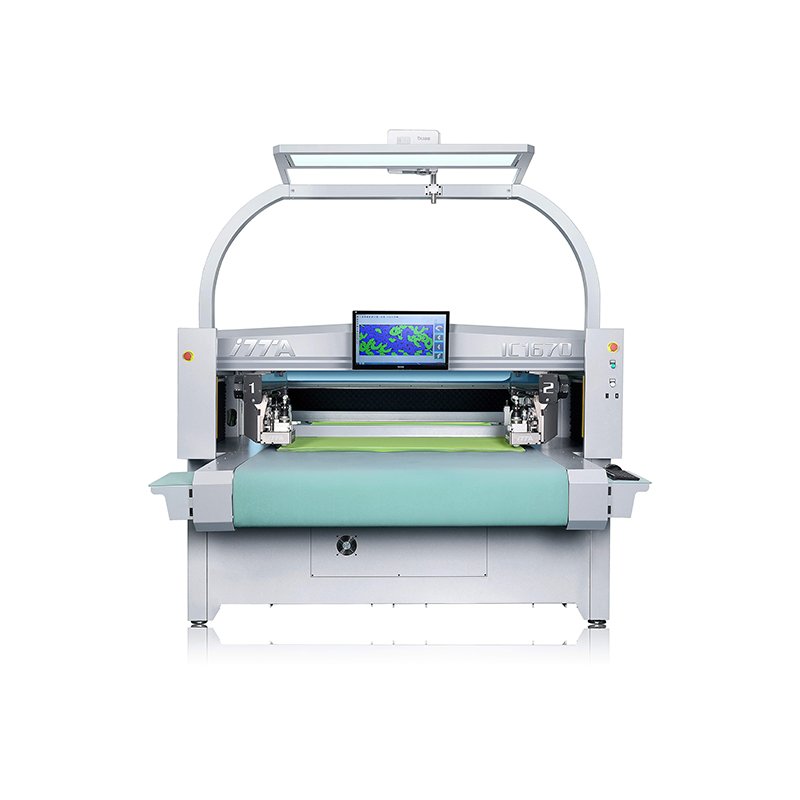
When selecting a new system, you must scrutinize vendor claims carefully. Many companies sell "black box" solutions and promise impossibly high yields. Avoid these exaggerated claims. Prioritize algorithmic transparency. Your operators need control over the process. Software should allow your team to set custom tolerances. Operators must be able to review the underlying logic behind any nesting suggestion. If the algorithm places a part strangely, the operator needs to understand why.
You also need to differentiate between dynamic and static capabilities. Static layouts lock you into single-order runs. If you are cutting one specific chair model, you only use those specific parts. Dynamic leather nesting merges parts from multiple concurrent orders. We call this mixed nesting. If you mix a large sofa order with a small handbag order, the algorithm uses the tiny handbag pieces to fill the awkward gaps left by the sofa pieces. This dramatically increases overall hide usage.
Software is useless if it cannot communicate clearly with your hardware. Data export capabilities and hardware synergy are non-negotiable. Seamless integration with existing CNC cutting machines is a baseline requirement. The software must generate precise toolpaths. It cannot just provide pretty visual layouts on a monitor. These precise toolpaths directly translate your digital yield into actual cutting efficiency.
Finally, demand robust reporting and analytics. Without data, you cannot prove your success. Comprehensive dashboard features track critical metrics daily.
Track the exact yield percentage per individual hide.
Monitor specific operator efficiency and loading times.
Calculate total square footage of material saved over a specific period.
Export historical data to validate your initial return on investment.
Technology looks perfect on paper, but the factory floor introduces harsh realities. Calibration is your first major hurdle. The software is only as good as the vision hardware feeding it data. High-end algorithms fail completely in poor lighting environments. You must acknowledge the necessity of controlled lighting overhead. Accurate physical camera calibration is mandatory. Changes in ambient factory sunlight can throw off defect recognition. You must stabilize the physical environment before the digital system can perform.
Change management poses a massive risk to successful adoption. You are fundamentally shifting operator roles. They transition from traditional "master cutters" to "system supervisors." This psychological shift creates friction. Experienced workers often distrust the algorithm initially. There is a high risk of operators manually overriding the AI. They rely on their gut instinct instead of the math. You must build their confidence systematically.
We recommend using split-testing to build this trust. Run the AI layout on a monitor. Ask your best manual cutter to map out the exact same hide on a separate table. Compare the final yield percentages and the time taken. When operators see the math consistently beat manual intuition, they accept the new tools. They begin to see the system as a powerful assistant rather than a replacement.
Accurate baseline assumptions ensure you can prove your progress later. You must measure your current manual utilization rate meticulously before installing any software. Do not guess your current efficiency. Gather hard data over a two-week period. Establishing this realistic benchmark is the only way to calculate true improvements down the line.
Evaluating vendors requires a hands-on approach. Do not rely on beautifully crafted marketing presentations. You must demand Proof of Concept testing. Buyers should insist on a live pilot run. During this test, supply your own hide samples. Provide your own DXF part files. Do not let the vendor use their pre-packaged demo files. Demo files consist of perfect squares and circles designed to showcase maximum efficiency. Your real-world production involves complex curves, sharp angles, and stubborn material defects.
Testing your actual patterns reveals the true power of the software. Watch how the algorithm handles your specific quality zones. Observe how long it takes to process a highly flawed hide. If the system struggles during the pilot run, it will certainly struggle during full-scale production.
Your actionable next step involves preparation. Audit your current waste metrics today. Digitize your top five most complex part patterns into clean DXF files. Source three hides that represent your average material quality. Once you have these assets, schedule side-by-side vendor benchmarks. Watching different algorithms process the exact same physical challenge provides ultimate clarity for your purchasing decision.
True material optimization requires moving far beyond basic digital layouts. You need intelligent systems that actually understand the biological variations of natural hides. Relying on human intuition limits your scalability and caps your profit margins. Advanced algorithms process spatial data and quality zones instantly, identifying opportunities the human eye simply misses.
Investing in robust Leather Nesting Software transitions your cutting room completely. It evolves from a volatile cost center heavily reliant on tribal knowledge into a predictable, highly data-driven environment. This transition protects your bottom line against rising raw material costs and skilled labor shortages.
Take control of your manufacturing data today. Request a customized ROI calculation from a reputable vendor. Schedule a live technical demonstration using your facility's specific production files and hide samples. The faster you digitize your cutting strategy, the faster you capture lost profits.
A: The timeline heavily depends on your daily material volume. However, most facilities see full returns between 6 to 14 months. This timeframe stems purely from direct waste reduction. High-volume automotive or furniture manufacturers often reach their break-even point much faster due to the massive scale of their daily material savings.
A: Yes. Most advanced systems export standard DXF or PLT file formats. These protocols communicate easily with legacy hardware. You may encounter minor retrofit limitations regarding network connectivity, but the core toolpath generation remains highly compatible across different machine brands.
A: Traditional auto-nesting uses a CPU to evaluate placement permutations sequentially, which takes considerable time. GPU nesting leverages massive parallel processing. It evaluates millions of layout permutations simultaneously. This advanced computing power yields much tighter margins and higher material utilization in a fraction of the time.
A: No. Human oversight remains a critical component of the workflow. Operators are essential for physically loading and stretching hides. They must supervise the system and handle edge-case quality assurance. The software elevates their role from manual puzzle-solvers to strategic process supervisors.