Views: 0 Author: Site Editor Publish Time: 2026-03-12 Origin: Site


In the modern leather manufacturing industry, material quality plays a pivotal role in production efficiency and product aesthetics. Every leather hide carries natural variations such as scars, holes, wrinkles, insect bites, and color inconsistencies. For furniture manufacturers, using high-quality leather is essential to maintain product standards for sofas, chairs, and other upholstered furniture. This is where the leather scanning machine becomes indispensable. By digitizing leather inspection, manufacturers can optimize material usage, reduce waste, and enhance production precision.
In ITTA's product range, the IR 3000 intelligent scanning nesting machine exemplifies a modern solution that integrates scanning, defect detection, and digital workflow support for furniture leather processing.
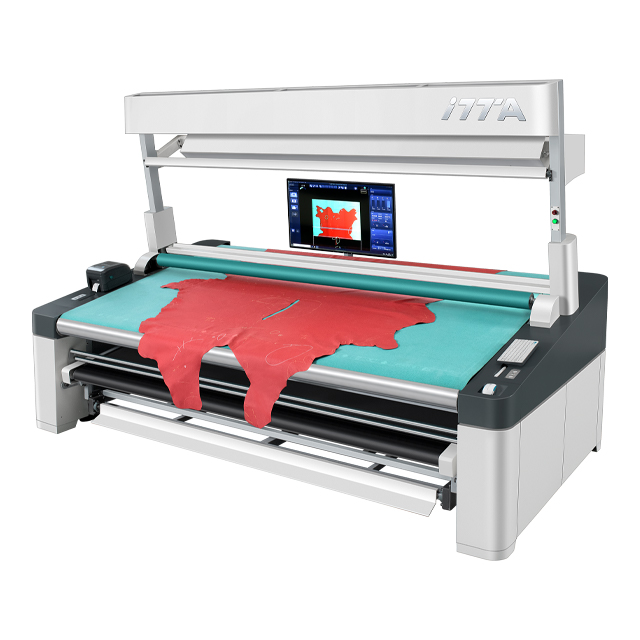
A furniture leather scanning machine is a specialized device designed to scan leather hides, detect defects, and create digital maps of usable areas. Unlike traditional manual inspection, it provides accurate, consistent, and efficient evaluation of leather quality. The machine captures leather contours, identifies defects, and outputs data directly to CAD and nesting systems for optimized cutting.
For furniture applications, this ensures premium quality areas are used for visible surfaces, while lower-quality zones can be allocated for hidden parts, maximizing leather utilization.
Leather is an expensive raw material. Reducing wastage through precise scanning and defect detection directly lowers material costs.
Manual inspection is subjective and inconsistent. A scanning machine provides repeatable, standardized data for quality grading and production planning.
Automated scanning significantly reduces inspection time compared to manual methods, freeing labor for other critical tasks and streamlining production.
The process of leather scanning generally includes four steps: scanning, contour recognition, defect detection, and data output.
The leather hide is placed into the scanning area. The IR 3000 intelligent scanning nesting machine captures the full hide, including shape, surface texture, and potential defects.
The machine identifies the leather's outer contour and calculates the usable area. This is essential for furniture leather where large, defect-free sections are required for upholstery.
The scanner automatically detects defects such as:
Scars
Holes
Insect bites
Wrinkles
Color inconsistencies
Defect information is digitized and stored for integration with cutting and nesting software.
Once scanning is complete, the machine outputs data to ITTA's CAD, scanning, and nesting systems. This enables intelligent cutting machines to optimize layouts, minimizing material waste.
The IR 3000 intelligent scanning nesting machine is a key solution in ITTA's digital leather ecosystem.
Automatic identification of leather that has been marked with defects
Sufficient light ensures that defects on the leather can be identified
Automatic recognition of colors
Defects are graded and automatically identified
| Parameter | Specification |
|---|---|
| Effective Width | 3650×1950×2370mm |
| Scan Speed | 15-30 PCS/HOUR |
| Power | 380V 1.5KW |
| Hardware Configuration | Scanner , HD industrial camera, infrared, HD projector, infrared pen,secondary conveyor ,display,lights |
| Identification Capability | Automatic detection of defects and usable areas |
ITTA emphasizes a complete digital workflow:
The scanned leather data is imported into ITTA CAD, allowing visualization of usable areas and planning for furniture components.
ITTA Scan and ITTA Nesting software use defect maps to generate optimized cutting layouts, maximizing leather utilization.
Data from the scanner feeds directly to machines such as:
IC800DHC automatic leather cutting machine OFF-LINE workflow
IC800DHC automatic leather cutting machine IN-LINE workflow
IC850DHC automatic leather cutting machine
IC960DHC intelligent leather cutting machine
This integration ensures accurate cutting according to the scanned hide and defect data.
Using a furniture leather scanning machine brings a range of advantages specifically for furniture manufacturers:
Improved Leather Grading and Quality ControlA scanning machine allows for precise identification of defects such as scars, holes, wrinkles, insect bites, and color inconsistencies. Furniture manufacturers can grade leather hides accurately, assigning premium quality areas for visible surfaces such as sofa seats, armrests, and back panels. Lower-quality sections can be reserved for hidden areas, such as the undersides or inner sections of furniture, ensuring that the final products meet aesthetic and functional standards consistently.
Maximized Material UtilizationBy digitizing defect locations and usable areas, manufacturers can optimize leather layouts using nesting software. This reduces waste, ensures efficient use of high-value material, and lowers overall production costs. High utilization rates directly translate to cost savings, which is particularly significant in furniture production where leather represents a major material expense.
Enhanced Production EfficiencyAutomated scanning dramatically reduces the time needed for manual inspection. Workers can focus on other tasks, and the inspection process becomes standardized, reducing errors and variability between batches. Furniture manufacturers benefit from faster throughput, more predictable production schedules, and reduced dependency on highly experienced labor.
Integration with Digital WorkflowsThe scanner integrates seamlessly with ITTA’s CAD and nesting software as well as intelligent cutting machines. This integration allows scanned data to drive the entire production chain, from planning to cutting, creating a cohesive digital workflow. Manufacturers gain better control over production, can respond faster to design changes, and maintain high levels of precision throughout the manufacturing process.
Consistency Across BatchesWith a furniture leather scanning machine, every hide is evaluated consistently according to the same criteria. This ensures that product quality remains uniform across large production runs, which is essential for brand reputation and meeting customer expectations in the competitive furniture market.
Reduction of Waste and Cost SavingsBy identifying defects accurately and optimizing material layouts, less leather is discarded, and fewer corrections are needed downstream. The result is a more sustainable production process, lower raw material costs, and improved profitability for furniture manufacturers.
Better Decision-Making DataThe digital output from the scanner provides comprehensive data for production planning and material management. Manufacturers can make informed decisions about which hides to use for specific furniture pieces, plan production schedules, and predict material requirements more accurately, leading to improved operational efficiency.
When selecting a furniture leather scanning machine, consider:
Defect Detection Accuracy: Ability to identify scars, holes, wrinkles, and color inconsistencies
Integration with Software: Compatibility with CAD, nesting, and cutting systems
Effective Width and Speed: Suitability for the size of hides and production volume
Technical Support: Manufacturer-provided training, maintenance, and spare parts
A leather scanning machine is an essential tool for modern furniture leather production. It enables precise, digital inspection of leather hides, detects defects, and integrates with digital cutting workflows to optimize material use and ensure product quality. The IR 3000 intelligent scanning nesting machine by ITTA exemplifies these capabilities, offering furniture manufacturers an advanced, reliable, and integrated solution for defect detection and efficient leather processing.