Views: 0 Author: Site Editor Publish Time: 2026-06-27 Origin: Site


The leather goods industry operates under incredibly high stakes. Raw material costs heavily dictate your overall profitability. Natural hides are expensive and highly variable in quality. Traditional manual processing methods can severely impact your bottom line. These outdated approaches often result in up to 30% material waste during production.
Historically, manufacturers relied entirely on analog workflows. Workers spent countless hours performing physical chalk marking. Factories depended on traditional die-cutting presses to stamp out patterns. These manual methods create massive production bottlenecks. They also introduce costly human errors into your daily operations. You cannot afford to rely on guesswork in a competitive market.
Transitioning to a commercial-grade Leather Scanning Machine fundamentally shifts your production logic. You move away from subjective human estimation. Instead, you adopt data-driven leather optimization. Digital workflows directly improve your cutting yield. They significantly reduce production cycle times. Ultimately, these advanced systems establish a highly measurable financial return for your facility.
Automated visual inspection and **defect detection** eliminate subjective human error, increasing usable hide area.
Algorithmic nesting typically yields an 8–15% reduction in material waste compared to manual layout.
Digital **scanning automation** removes the need for physical chalking and slashes die-retooling times (historically 2 to 12 weeks) down to zero.
Initial capital expenditures for a high-end **leather scanner** generally see an ROI within 18 to 24 months through combined material savings and a 7–8x increase in cutting speed.
Cutting yield represents the core metric of profitability in any leather factory. It defines the exact percentage of raw hide successfully converted into a usable product. High yields mean lower costs per unit. Low yields mean you throw away potential revenue. Every single percentage point gained or lost dramatically impacts your annual margins. Relying on outdated processing tools makes achieving optimal yields nearly impossible.
Manual pattern layouts present a massive efficiency problem. Human operators must visually inspect each hide. They search for natural flaws. Common issues include stretch marks, tick bites, brandings, and localized thickness variations. Workers naturally leave wider buffer zones around these imperfections. They want to avoid ruining a final piece. Operators play it safe to prevent quality control rejections later. Unfortunately, this cautious approach utilizes the material highly inefficiently. Huge swaths of perfectly good leather end up in the scrap bin.
Analog workflows also carry severe hidden labor wastes. Consider the manual chalking process. A worker physically traces patterns onto the hide. After cutting, another worker must manually clean the chalk marks off the finished pieces. This process burns valuable man-hours. Furthermore, physical die press changeovers act as a severe production bottleneck. Swapping out heavy steel dies takes significant time. Factory lines sit idle while technicians retool the machinery. You pay workers to wait instead of producing goods.
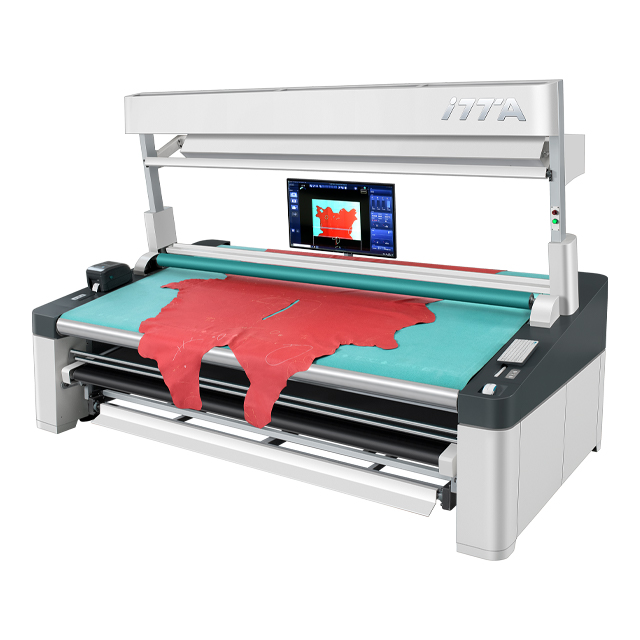
Modern digitizing systems completely transform how you assess raw materials. They utilize extremely powerful HD line-scan cameras. Many of these industrial cameras boast resolutions exceeding 30,000 pixels. They capture incredibly detailed images of the material surface. These optical sensors map the entire topography of the hide instantly. The system performs high-speed defect detection. It identifies, classifies, and bypasses scratches, subtle color variations, and microscopic pinholes. It completes this complex analysis in mere seconds.
Once scanned, the software initiates automated leather grading. Hides do not possess uniform quality throughout. The system assigns distinct quality zones to different parts of the biological canvas. For example, it reserves the pristine center cuts strictly for luxury fascias or prominent seating surfaces. Conversely, it routes lower-grade edge materials to hidden components. You might use these edge pieces for interior structural linings or small, low-stress accessories. This intelligent sorting maximizes the financial value of every single square inch.
The speed and scale of digital scanning completely outpace human capabilities. Consider a realistic factory baseline. A standard large hide measures approximately 1.8 by 1.8 meters. A human might take ten minutes to inspect and mark it properly. A commercial system fully scans and maps that exact same hide in approximately 40 seconds. This staggering speed completely removes the manual inspection bottleneck from your factory floor. You can process hundreds of hides per shift seamlessly.
Optical Capture: High-resolution cameras photograph the entire hide surface under controlled lighting.
Contour Recognition: The software identifies the exact outer perimeter and usable area of the irregular hide.
Flaw Classification: AI algorithms detect and categorize distinct types of natural surface blemishes.
Quality Zoning: The system maps the material into distinct tiers based on surface perfection and structural integrity.
Arranging complex digital shapes on an irregular biological material presents a mathematical nightmare. Computer scientists refer to this as an NP-Hard problem. You cannot rely on simple formulas. The hide features asymmetrical borders. The material contains random zones of varying quality. You must place dozens of different pattern pieces onto this canvas. Doing this efficiently requires immense computational power. Human spatial reasoning simply cannot calculate the best possible layout fast enough.
Nesting software solves this mathematical hurdle brilliantly. It generates dynamic pattern layouts automatically. The algorithmic engine assesses millions of potential orientation permutations. It rotates and shifts pieces digitally to find the perfect fit. Remarkably, the software completes this exhaustive evaluation in roughly two minutes. It minimizes the empty gaps between patterns far better than your most experienced human cutter. It squeezes patterns tightly around detected flaws without compromising product quality.
This technology also enables waste-free prototyping. Agile manufacturing demands speed and flexibility. Small-batch production runs are becoming highly common. A dedicated leather scanner allows for precise, immediate sample runs. Designers can upload a new digital CAD file directly to the machine. You skip the entire traditional tooling phase. You eliminate the material waste historically associated with test-cutting physical dies. You can take a new handbag design from a computer screen to a physical cut sample in minutes.
Process Type | Average Layout Time | Typical Material Waste | Adaptability to Flaws |
|---|---|---|---|
Manual Human Nesting | 10 - 15 Minutes | 25% - 30% | Low (Uses large safety buffers) |
Algorithmic Digital Nesting | 1 - 2 Minutes | 10% - 15% | High (Pixel-perfect proximity) |
Upgrading your factory floor requires clear financial justification. Material savings provide the most immediate and visible financial return. Industry benchmarks show an 8–15% reduction in raw material usage following digitization. This massive saving stems strictly from optimized algorithmic nesting. You purchase fewer hides to produce the exact same volume of goods. For factories spending millions on premium raw materials annually, this single metric often justifies the entire equipment upgrade.
Labor and throughput gains further accelerate your financial returns. Digital workflows eliminate manual tracing entirely. They also remove the heavy lifting associated with physical die handling. Historically, labor accounted for up to 40-60% of traditional cutting room expenses. Modern scanning automation slashes these labor requirements drastically. Furthermore, the machines operate continuously without fatigue. Production velocity can increase by up to 700%. You push products out the door significantly faster.
Predicting the payback period requires a transparent financial framework. Enterprise-grade equipment undoubtedly requires significant upfront capital. However, you must look at the combined operational savings. You experience drastically reduced scrap rates. You also benefit from lower maintenance costs. Digital cutters avoid the expenses of sharpening and replacing heavy steel dies. Maintenance costs typically drop 30-40% compared to traditional die presses. When combined with increased throughput, this amalgamation reliably drives an 18 to 24-month return on investment.
Expense Category | Traditional Die-Cutting Workflow | Digital Automated Workflow | Net Financial Impact |
|---|---|---|---|
Raw Material Costs | High (Excessive scrap) | Optimized (Maximum yield) | 8-15% Annual Savings |
Labor Expenses | High (Manual tracing/handling) | Low (Machine supervision) | Reduced Overtime & Headcount |
Maintenance Fees | Frequent die replacements | Software updates / Blade swaps | 30-40% Cost Reduction |
Tooling Setup Time | 2 to 12 weeks for new dies | Zero (Instant CAD upload) | Infinite Flexibility |
Installing sophisticated technology requires careful change management. Operator training requirements represent your first major hurdle. The required factory skill sets will shift dramatically. Your staff will transition from wielding hand tools to managing complex digital interfaces. This transition requires a mandatory upfront investment in workforce upskilling. Do not underestimate this phase. We recommend identifying a tech-savvy "super user" on your floor. Let them master the system first. They can then train the broader team effectively.
Software integration dictates your overall operational success. A standalone machine offers limited benefits. The true value of systemic digitization is unlocked through connectivity. Your new scanner must integrate seamlessly with your existing CAD software. It also needs to communicate directly with your factory ERP systems. This integration ensures end-to-end material traceability. You can track exactly which hide went into which specific product batch. This data proves invaluable for quality control audits and sustainability reporting.
Hardware maintenance requires a distinct shift in factory habits. Overall mechanical maintenance remains lower than traditional presses. However, precise optical equipment demands specific environmental conditions. Factory dust, leather particles, and floating debris can quickly obscure camera lenses. Dirty lenses severely degrade defect recognition accuracy. You must maintain clean operational environments. Some facilities install positive pressure enclosures around the scanning zone. You must enforce routine optical calibration schedules. Preventative care protects your expensive investment.
Common Mistake: Rushing the software integration phase and isolating the scanner from the factory ERP network.
Best Practice: Establish daily lens cleaning protocols and schedule monthly professional calibration checks.
What to Watch Out For: Resistance from veteran cutters. Show them how the machine removes repetitive physical strain from their daily tasks.
Upgrading your facility is not merely an operational luxury. It represents a vital strategic asset for long-term margin protection. Implementing a modern Leather Scanning Machine transforms raw guesswork into measurable data. You eliminate severe production bottlenecks. You drastically reduce expensive material waste. Furthermore, this technology firmly supports sustainable manufacturing and modern zero-waste initiatives.
When selecting your equipment, apply strict shortlisting logic. Prioritize vendors based on tangible performance metrics. Evaluate their camera resolution capabilities carefully. Test their algorithm processing speeds against complex patterns. Ensure their software offers robust integration flexibility. Always ask for verifiable machine uptime metrics from existing clients. Do not buy based on marketing brochures alone.
Your next step should be highly actionable. Reach out to reputable equipment manufacturers directly. Encourage your decision-makers to request a custom ROI calculation. Better yet, demand a live material-yield test. Send the vendor a batch of your own production hides. Let them prove the exact material savings on your specific product lines. Seeing your own data makes the investment decision remarkably clear.
A: High-end industrial machines process materials incredibly fast. They typically scan and map a standard-sized hide in under one minute. The subsequent algorithmic nesting phase takes an additional one to two minutes. This rapid sequence completely eliminates traditional factory inspection bottlenecks.
A: Yes, absolutely. State-of-the-art vision systems use advanced AI and high-resolution cameras. They can be precisely calibrated to recognize various imperfections. The software easily categorizes deep scars, hot iron brands, insect bites, and even subtle grain or color changes across the hide.
A: Most modern digital scanning systems prioritize broad compatibility. They are explicitly designed to export standardized CAD files. They integrate natively with existing CNC dieless cutting machines. Furthermore, they connect seamlessly with your central factory ERP systems to ensure comprehensive data tracking.