Views: 0 Author: Site Editor Publish Time: 2026-06-14 Origin: Site


Leather manufacturing faces a constant, unforgiving challenge. You buy expensive, highly variable natural materials. You need to turn them into consistent, premium products. Manual inspection usually maxes out around a 70% to 85% accuracy rate. Operator fatigue inevitably sets in. Subjective human judgment creates hidden inconsistencies.
These errors lead to expensive downstream rework. They cause scrapped parts and trigger painful buyer disputes. You cannot simply inspect harder. You need a structural change in how you evaluate materials.
Enter the automated solution. A modern Leather Inspection Machine is not just a magic bullet. It represents a highly calibrated integration of machine vision and deep learning. Engineers design these systems to digitize, objectify, and optimize the entire evaluation workflow.
In this article, you will discover how these automated systems achieve 99% accuracy. We break down their real impact on material yield. We also explore the practical criteria operational leaders should use when evaluating a new automated system.
Accuracy Shift: Transitioning from subjective manual checks to AI-driven systems bridges the gap from ~80% to 99%+ consistency in defect detection.
Yield Optimization: Accurate digital defect mapping directly informs nesting algorithms, typically improving production yield and cutting efficiency.
Throughput Gains: Modern automated systems can scan, map, and grade a full hide in as little as 14–15 seconds.
Strategic Value: Earlier detection (e.g., at the wet blue stage) reduces logistics costs, shipping waste, and end-buyer quality claims.
Operators face a physical paradox daily. Factory leaders ask them to inspect massive surface areas. A single hide often measures up to two by three meters. Yet, they must search for micro-defects as small as 150 microns. Human eyes simply cannot sustain this level of focus.
Subjectivity ruins consistency. Human grading fluctuates based on shift timing. Lighting conditions change throughout the day. Individual operator experience varies wildly. This variability creates unpredictable batch quality. One inspector might accept a slight color variation. Another might reject it entirely.
Missed flaws carry a heavy cost. Imagine a subtle anomaly slips past manual sorting. Fine grain inconsistencies or hidden scars move down the production line. You only discover them after CNC cutting or final assembly. The cost of failure skyrockets. You waste labor, machine time, and expensive raw material. This reality makes automated leather inspection essential for maintaining profitability at scale. By replacing tired eyes with tireless sensors, facilities instantly eliminate the most unpredictable variable in their workflow.
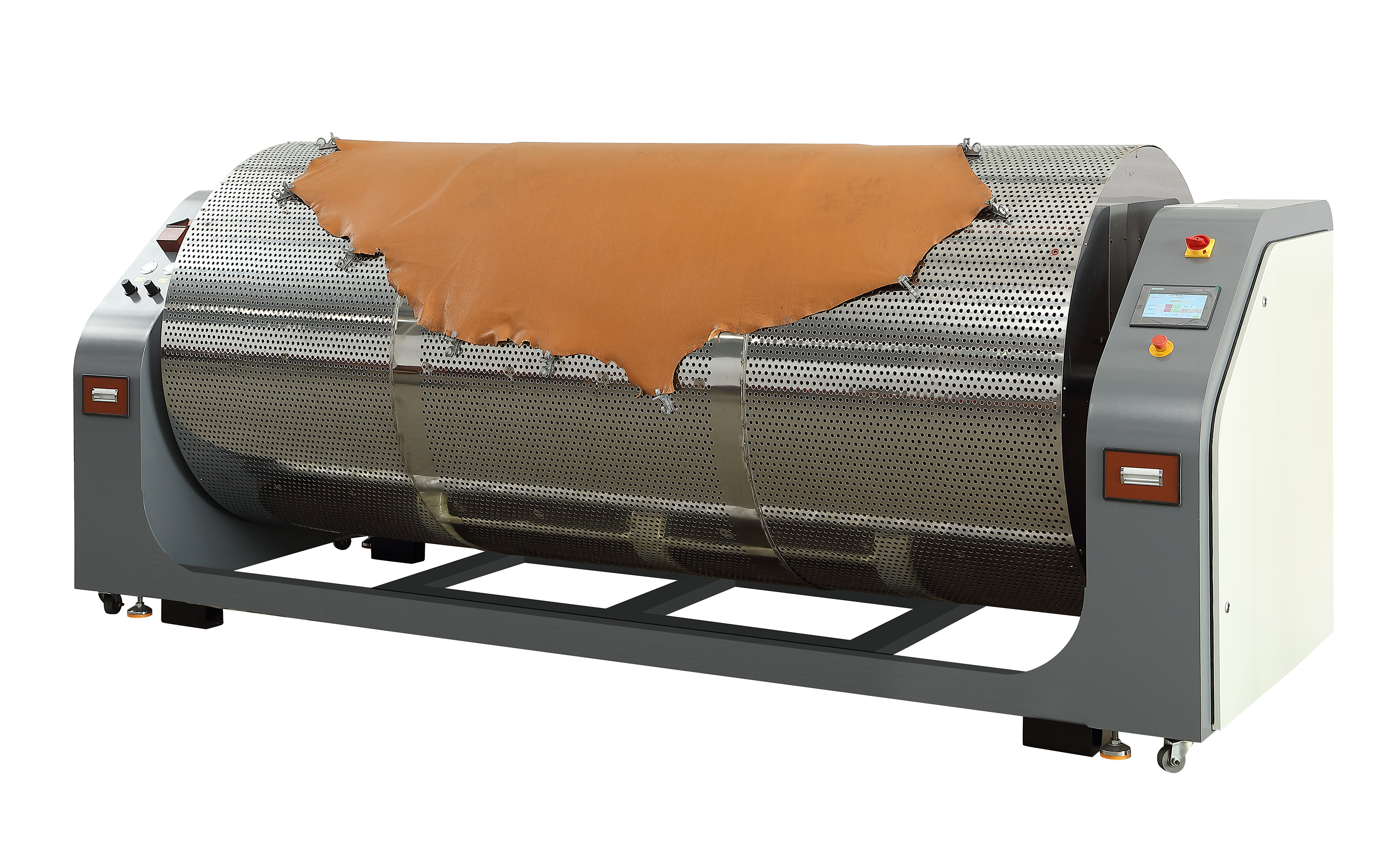
Hardware and software must work in perfect harmony. You cannot just attach a camera to a conveyor belt. Accurate leather scanning requires an orchestrated technology stack designed specifically for complex natural surfaces.
Image acquisition dictates system success. Engineers often differentiate between older line-scan sensors and modern alternatives. Line-scan sensors can suffer from anisotropic blind spots. Speed variations distort the resulting image. Modern ultra-high-definition (UHD) area cameras solve this. Contact Image Sensors (CIS) also provide incredible detail. They capture continuous, distortion-free images at high speeds.
Illumination engineering makes or breaks the system. Flat lighting hides topographical anomalies. Diffused lighting reduces glare on highly finished surfaces. However, off-axis directional LED arrays remain strictly necessary. They cast precise micro-shadows. These shadows expose wrinkles, indentations, and subtle texture shifts.
The AI "Brain" processes this visual data instantly. Deep learning architectures handle the heavy lifting. They mimic human cognition but execute decisions in milliseconds. The software stack relies on three critical components:
Convolutional Neural Networks (CNNs): These networks distinguish between a natural, acceptable grain variation and an actual defect. They understand context and texture.
YOLO (You Only Look Once): This algorithm ensures real-time processing speed. It analyzes the entire hide simultaneously without bottlenecking the fast-moving conveyor line.
Semantic Segmentation: This technology moves beyond merely drawing a box around a defect. It draws pixel-perfect boundaries along the flaw's exact contour. This precision maximizes the usable area for later nesting.
The system must categorize flaws accurately. It distinguishes visible defects from subtle ones. Visible flaws include catastrophic issues like holes, deep scratches, and severe tick marks. Subtle defects involve aesthetic flaws like minor color deviations or light indentations.
Advanced defect detection relies on predefined digital thresholds. The machine does not guess. It measures pixel contrast, structural depth, and area size. It then compares these metrics against strict acceptable tolerances.
This process standardizes leather grading globally. We transition from human opinion to algorithmic scoring. Systems map the exact percentage of usable area versus defective area. They assign a grade mathematically. A "Grade A" hide scanned in Italy matches a "Grade A" hide scanned in Mexico perfectly. You eliminate endless supplier debates.
Implementation realities require customized grading rules. Modern software allows tanneries to set bespoke parameters. Automotive clients might reject any clustered defects entirely. Furniture clients might accept isolated defects in non-visible seating areas. The AI adapts to your specific commercial requirements. You tell the system what matters to your buyer. It enforces those rules mercilessly.
Decision-makers need hard metrics. Switching to automated systems transforms operational benchmarks. You achieve faster cycles, better yields, and total accountability. We can summarize these improvements across three main operational pillars.
First, cycle time reduction changes factory flow. Advanced systems scan and map up to 360 hides per hour. A complete cycle takes roughly 15 seconds. Manual handling takes minutes per hide. It requires constant flipping, marking, and measuring. Automation removes this physical bottleneck entirely.
Second, material yield improvements directly boost margins. The digital contour map feeds directly into automated cutting systems. Smart algorithms protect high-quality zones. They nest parts tightly around identified defects. This synergy between scanning and cutting can increase output per hide by up to 25%. You buy fewer hides to fulfill the same production order.
Third, digital traceability provides long-term value. Every hide receives a unique digital passport. Manufacturers link this data to their overarching quality control protocols. If a defective piece reaches a final buyer, you can investigate easily. You pull up the exact hide, review the scan time, and examine the original digital map. This identifies the root cause instantly. It radically reduces liability and prevents future recurrences.
Metric | Manual Process | Automated System |
|---|---|---|
Inspection Speed | 2 to 4 minutes per hide | 14 to 15 seconds per hide |
Accuracy Rate | 70% to 85% (decreases over shift) | 99%+ (consistent 24/7) |
Yield Optimization | Relies on operator visual estimation | Up to 25% increase via pixel-perfect mapping |
Traceability | Paper tags, highly prone to loss | Full digital passport and cloud-based logging |
Selecting the right equipment requires systematic evaluation. Operational leaders must look past marketing claims. You need hardware and software tailored to your specific factory environment. Consider these four critical criteria when shortlisting vendors.
System Architecture (Inline vs. Standalone): Assess your current floor plan. Do you need an inline system? Inline setups integrate directly with existing wringing or stretching conveyors. They suit high-volume, continuous processing. Standalone offline scanning tables work better for smaller batches or highly specialized custom workflows.
Data Requirements and AI Training: Debunk the "massive data" myth. Legacy AI required thousands of images to learn. Evaluate vendors based on small-sample learning capabilities. The best modern systems require only 20 to 100 images of specific defects to fine-tune their models. They deploy in days, not months.
Material Stage Compatibility: Ensure hardware suits your specific production stage. Inspecting wet blue leather requires moisture-resistant hardware and pH-tolerant environments. Finished crust leather requires different lighting configurations to handle surface glare. Choose a vendor whose equipment handles your exact material state safely.
Software Ecosystem and Updates: Avoid static software. Opt for vendors offering continuous algorithm updates. Many provide these via SaaS models. Ensure seamless API integration. The system must talk directly to your existing Manufacturing Execution Systems (MES) and downstream CNC cutters. Isolated data creates new bottlenecks.
Automated equipment fundamentally shifts quality control. It transforms a reactive, subjective bottleneck into a predictive, data-driven asset. You stop guessing about raw material quality. You start measuring it with mathematical certainty.
Success still requires upfront calibration. AI is incredibly powerful, but it needs your guidance initially. You must define what constitutes a defect for your specific buyers. The system needs clear parameters before you can expect flawless performance. Garbage data in means garbage data out.
Start small to minimize risk. Recommend a vendor pilot program or a sample audit. Send a batch of notoriously difficult hides to the vendor. Test their system's semantic segmentation firsthand. Measure their false-positive rates. Once you see the precise defect maps and the resulting yield improvements, the business case practically writes itself.
A: High-end systems are designed for both. Inspecting at the wet blue stage is highly recommended. It allows for pre-grading before international shipping. This drastically reduces logistics costs and shrinks the carbon footprint associated with transporting unusable hides.
A: Modern deep-learning architectures utilize pre-trained models. Fine-tuning a system for a proprietary or highly specific defect requires a surprisingly small dataset. You often need under 100 annotated images. Engineers can deploy these new parameters in days, not months.
A: Yes. Most enterprise-grade inspection systems are hardware-agnostic regarding the downstream cutting process. They generate standardized digital defect maps, often standard vector files. These files project directly onto the nesting software of existing CNC cutters to guide automated material handling seamlessly.