Views: 0 Author: Site Editor Publish Time: 2025-11-20 Origin: Site


Leather cutting is an essential process in a variety of industries, from fashion and accessories to automotive manufacturing. The precision, speed, and efficiency with which leather is cut can significantly impact the final product’s quality, production costs, and overall efficiency. The leather cutting process, when done incorrectly or inefficiently, can result in wastage, inaccurate patterns, and delayed production times. In this article, we will focus on why the Leather Cutting Machine is considered the most effective solution for cutting leather, offering significant advantages over traditional manual methods.
Leather, whether it is genuine or synthetic, has a variety of characteristics that make it a complex material to cut. One of the biggest challenges is its inconsistency in thickness. Leather can vary from very thin and flexible to thick and rigid. These variations require different approaches for cutting, making it important to select the right cutting equipment.
Thickness: Leather can be as thin as paper or as thick as several millimeters. This variation can affect how the leather reacts to cutting, with thicker leather requiring more force and precision.
Texture: Leather comes in various textures, from smooth and shiny to rough and textured. A machine designed for leather cutting must be capable of handling these different textures without damaging the material.
Flexibility: Leather can range from highly flexible (as in fashion garments) to stiff (as in furniture upholstery). The cutting machine must be adaptable to these variations to ensure accurate and clean cuts without compromising the material.
The combination of these variables can complicate the cutting process, but a Leather Cutting Machine is designed to handle these factors more effectively than manual cutting methods, which can struggle to maintain consistency.
Historically, leather was cut manually using knives, rotary cutters, or scissors. While this method may still be used in smaller workshops, it has numerous drawbacks that make it unsuitable for large-scale production. Manual cutting is slow and prone to human error, which can lead to inconsistent results.
Inaccuracy: Small deviations in cutting angle or pressure can result in uneven pieces that fail to meet design specifications.
Time-Consuming: Manual cutting is slower compared to automated methods, which can be a significant bottleneck in mass production.
Labor-Intensive: Skilled labor is required for manual leather cutting, which can be costly and difficult to maintain in high-volume environments. Additionally, the physical nature of manual cutting may cause fatigue, leading to reduced efficiency and precision over time.
Given these limitations, automated solutions like the Leather Cutting Machine have become the preferred method in the leather industry.
The core advantage of a Leather Cutting Machine is its ability to deliver high precision with every cut. Unlike manual cutting, which can vary from one operator to another, a cutting machine ensures that every piece of leather is cut exactly to the same specifications. This precision is essential in industries where the final product’s quality relies on consistent dimensions and shapes, such as fashion, automotive, and furniture production.
Uniformity: Every cut is made with exact measurements, ensuring consistency across all pieces.
Reduced Waste: Accurate cutting minimizes the need to rework or discard pieces, which helps to save materials and reduce costs.
Complex Designs: With the aid of advanced software, Leather Cutting Machines can easily handle intricate patterns that would be difficult, time-consuming, or impossible to cut manually.
In industries where tight tolerances are required, Leather Cutting Machines provide the exacting standards needed to meet these demands.
In addition to precision, Leather Cutting Machines also increase overall efficiency. These machines can operate continuously, cutting large volumes of leather in much less time than manual methods. This capability is particularly beneficial in high-volume production environments where meeting deadlines and maintaining high throughput is critical.
Faster Production: Machines can process leather at a much faster rate than manual cutting, allowing businesses to increase output and meet tight production deadlines.
Higher Throughput: Automated machines can handle large quantities of leather, making them ideal for companies with substantial orders.
Automated Workflow: Modern cutting machines come with automated features, such as conveyor systems and automatic blade adjustments, reducing the need for constant supervision and manual input.
This increased efficiency translates directly into cost savings, as businesses can produce more leather goods in less time with fewer resources.
Leather is often an expensive material, so minimizing waste is a significant concern in the cutting process. Traditional cutting methods, whether manual or basic automated systems, may not always use leather as efficiently as possible. Leather Cutting Machines, however, are equipped with software that can optimize cutting layouts, ensuring the most efficient use of every piece of leather.
Optimized Cutting Paths: Advanced cutting software calculates the best way to lay out patterns on leather sheets, ensuring that each piece is used to its full potential.
Reduced Scrap: By minimizing gaps between patterns and optimizing the layout, these machines reduce the amount of scrap leather produced.
Environmentally Friendly: Less waste means a reduced environmental impact, aligning with sustainable manufacturing practices and reducing overall production costs.
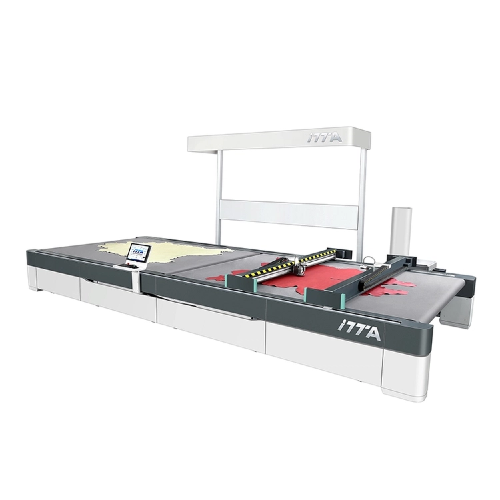
At the heart of the Leather Cutting Machine is its blade technology. These machines use sharp, durable blades designed specifically for cutting leather. The blades can be adjusted to accommodate different leather thicknesses, ensuring clean, precise cuts without damaging the material. The force exerted by the blades can be regulated based on the material's resistance, providing more control over the cutting process.
Precision Blade: The blade is the primary cutting tool and is designed to provide accurate cuts while maintaining the integrity of the leather.
Adjustable Pressure: Machines can adjust the pressure applied to the leather, ensuring the blade cuts cleanly without deforming or damaging the material.
Automatic Cutting Feed: The machine feeds the leather into the cutting area, which allows for continuous operation and reduces the need for manual handling.
This combination of sharp blades and adjustable cutting pressure ensures that the leather is cut with precision and efficiency.
Leather Cutting Machines are also equipped with advanced automation systems. These systems enable the machine to operate autonomously, cutting leather based on digital designs and patterns. The integration of software plays a critical role in making the cutting process efficient and precise.
CAD Integration: Designs are transferred directly from CAD (Computer-Aided Design) programs to the cutting machine, ensuring that the machine cuts the leather according to the exact specifications.
Nesting Software: Nesting software arranges the cutting patterns on leather sheets in the most efficient way, minimizing material waste.
User-Friendly Interface: Operators can monitor and control the cutting process through intuitive interfaces, making it easy to adjust settings and ensure everything is running smoothly.
The combination of automation and software integration greatly enhances the overall performance of Leather Cutting Machines, making them more efficient and adaptable to various production needs.
There are various types of Leather Cutting Machines designed to meet different production needs. Whether you are working with small batches or large-scale production, there is a machine tailored to your specific requirements. Here is an overview of the most common types:
Machine Type | Key Features | Best for |
Flatbed Cutting Machine | Flat cutting surface, ideal for large sheets of leather | Large-scale production |
Roll-fed Cutting Machine | Automatically feeds leather rolls into the machine | Continuous production, leather rolls |
Multi-head Cutting Machines | Multiple cutting heads for simultaneous cuts | High-volume, multi-layer cutting |
Die Cutting Machines | Uses custom dies for specific patterns | Custom designs, small production runs |
Each machine type is designed to serve different needs. For example, roll-fed cutting machines are ideal for continuous production lines, while flatbed cutting machines excel in high-volume, large-sheet leather cutting.
When selecting a Leather Cutting Machine, it’s essential to consider several factors that will affect both your production needs and the overall cost-effectiveness of the machine.
Precision: The machine must deliver the precision required for your specific leather goods.
Speed: Depending on your production requirements, you may need a machine that offers high cutting speeds.
Cost: Machines come at different price points, so it’s essential to find one that fits within your budget while meeting your production needs.
Ease of Operation: Choose a machine with an intuitive interface to minimize training time for operators and reduce the likelihood of human error.
A leather cutting machine should match your production scale. For smaller businesses, a less complex machine may be sufficient. However, larger manufacturers with high throughput requirements should invest in more advanced machines capable of handling bulk orders efficiently.
Leather Cutting Machines have become indispensable in the leather industry due to their unmatched precision, efficiency, and adaptability to different leather types and thicknesses. These machines not only accelerate production speed but also minimize waste, leading to significant cost savings and enhanced material utilization. For businesses aiming to stay competitive in the evolving leather market, investing in a high-quality Leather Cutting Machine is crucial.
If you're looking to enhance your leather cutting processes, Guangdong ITTA Digital Intelligence Technology Co., LTD offers a range of advanced cutting solutions tailored to your specific needs. With their state-of-the-art technology, ITTA ensures high precision and efficiency for various leather applications, making them a trusted partner in modern leather production. For more information or to find the ideal machine for your business, we highly recommend reaching out to ITTA's expert team for personalized advice and support.
Q1: What is the difference between a leather cutting machine and manual cutting?
A1: A leather cutting machine provides higher precision, faster speeds, and greater consistency than manual cutting, making it ideal for large-scale production and high-quality output.
Q2: Can leather cutting machines cut various types of leather?
A2: Yes, modern leather cutting machines are designed to handle various types of leather, including soft, thick, and multi-layered materials.
Q3: How does nesting software help in leather cutting?
A3: Nesting software helps to optimize the layout of patterns on leather sheets, minimizing material waste and ensuring the most efficient use of the material.
Q4: Are leather cutting machines suitable for both small and large-scale production?
A4: Yes, there are different types of leather cutting machines available that can cater to both small businesses and large-scale manufacturers.
Q5: How do I maintain a leather cutting machine?
A5: Regular maintenance involves checking the blades for sharpness, cleaning the machine parts, and ensuring the software and mechanical systems are functioning smoothly.