Views: 0 Author: Site Editor Publish Time: 2025-11-21 Origin: Site


The leather industry is expanding, driven by its use in various sectors such as fashion, automotive, furniture, and accessories. From high-end handbags to car seat upholstery, leather remains one of the most valuable and versatile materials. However, as demand for leather products rises, manufacturers face the challenge of achieving precision, efficiency, and cost-effectiveness in production.
In this context, leather cutting machines have become a vital tool for businesses, enabling faster production, higher precision, and better material utilization. But are they truly worth the investment? In this article, we’ll explore the advantages of using leather cutting machines, the industries that benefit from them, and whether they provide a good return on investment (ROI) for businesses of all sizes.
Leather cutting machines are automated systems designed to cut leather into precise shapes and sizes for various products. These machines use blade-based cutting technology, which involves rotating or oscillating blades to cut through leather sheets, ensuring clean and accurate cuts. They are often equipped with advanced software for material nesting, which optimizes cutting patterns and reduces waste.
These machines are an essential part of production lines in industries such as fashion, furniture, automotive, and footwear.
There are several types of leather cutting machines available, each suited for different production needs. These include:
Automatic Leather Cutting Machines: Fully automated systems designed to cut large volumes of leather quickly and accurately.
CNC Leather Cutting Machines: Computerized numerical control (CNC) machines that allow for precise control over cutting paths.
Blade-Based Cutting Machines: Machines that use a rotating blade to slice through leather, often more affordable and efficient for small to medium-scale production.
One of the main reasons businesses invest in leather cutting machines is the precision they offer. Manual cutting methods often lead to inconsistencies in shape, size, and cutting angles, which can result in waste and defects in the final product. Leather cutting machines, on the other hand, provide highly accurate cuts, ensuring that each piece of leather is cut precisely according to the design specifications.
Blade-based leather cutting machines can achieve millimeter-level precision, which is particularly important for industries that demand high-quality leather goods, such as fashion and automotive.
Another key advantage of leather cutting machines is the speed at which they can operate. While manual cutting methods are time-consuming, especially when dealing with large volumes of leather, machines can cut hundreds of pieces in the same time frame.
Manual cutting: Can take hours to cut a few dozen leather pieces.
Leather cutting machines: Can cut hundreds of leather pieces per hour.
This boost in production speed can significantly reduce lead times and help manufacturers meet large orders more effectively.
Leather is an expensive material, and inefficient cutting methods can result in a lot of waste. Leather cutting machines are designed to optimize the use of materials by arranging the cutting patterns in a way that minimizes unused leather.
Material savings: With advanced nesting software, leather cutting machines can calculate the best arrangement of patterns on the leather sheet, reducing material waste by up to 20-30%.
Reduced wastage: The machines ensure that even irregularly shaped pieces are cut efficiently, preventing unnecessary scraps.
This efficiency is particularly beneficial for industries where leather is a high-cost material, such as automotive and luxury fashion.
While the initial cost of purchasing a leather cutting machine can be substantial, the long-term savings make them a worthwhile investment. By reducing labor costs, material waste, and increasing production speed, leather cutting machines help businesses become more cost-effective.
Labor costs: With automation, the need for manual labor is reduced, which can lower overall operating costs.
Material savings: Optimizing leather usage minimizes the need to purchase additional material, cutting costs.
Fewer defects: Precise cutting results in fewer errors, reducing the need for rework or product returns.
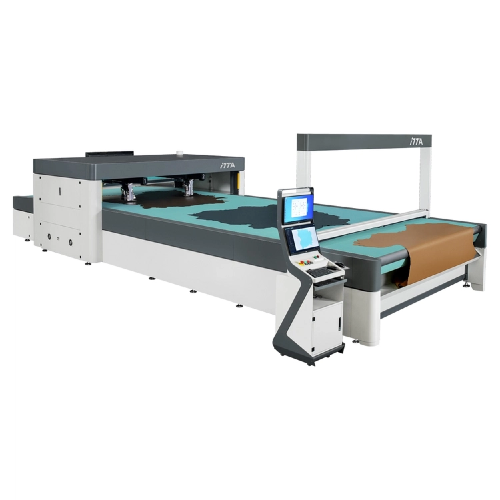
The fashion industry relies heavily on leather for products like handbags, jackets, shoes, and belts. Leather cutting machines enable designers and manufacturers to quickly cut leather into specific shapes for different styles, maintaining consistency across multiple products.
Precision: In fashion, even the slightest error in cutting can affect the overall design and appearance of the product. Leather cutting machines ensure each piece is cut exactly to specification.
Customization: Machines can easily handle customized designs, allowing manufacturers to produce bespoke leather goods on demand.
Leather is widely used in the automotive industry, particularly in seat upholstery, dashboards, and trims. Leather cutting machines help manufacturers cut precise patterns for car seats and interior details, offering the strength and durability required for automotive applications.
Durability: Leather seats need to withstand wear and tear. Accurate cutting ensures that the leather fits perfectly, enhancing the longevity of the seats and reducing the risk of material failure.
Efficiency: Automotive manufacturers can cut large batches of leather quickly, reducing production time and increasing throughput.
In the furniture industry, leather is used for making sofas, chairs, and other high-end furniture. Leather cutting machines can streamline the production process by efficiently cutting large panels of leather for furniture pieces.
Large-scale production: Leather cutting machines allow furniture manufacturers to cut large sheets of leather with minimal waste, making the process more cost-effective.
Customization for different designs: With customization options, leather cutting machines can produce intricate and detailed patterns, providing manufacturers the flexibility to create unique pieces.
In the footwear and accessories industry, leather cutting machines are used to cut leather for shoes, bags, wallets, and belts. The precision of these machines ensures that each piece of leather is the correct shape and size for assembly.
Precision for small components: Leather cutting machines can handle smaller, more intricate pieces for footwear and accessories, providing the precision needed for high-quality products.
High-volume production: With the ability to cut large volumes quickly, leather cutting machines are ideal for footwear manufacturers who need to produce large batches efficiently.
Leather cutting machines are not only for large manufacturers but are also valuable for smaller businesses offering custom leather products. These machines allow artisans and small-scale producers to efficiently cut unique, customized leather pieces, offering higher-quality products to their customers.
Flexibility: Smaller companies can use these machines to create custom leather designs and orders, without the need for large, expensive manual labor.
Higher-quality output: Automation ensures a high level of consistency and quality in every custom piece.
When choosing a leather cutting machine, it's essential to consider the cutting capacity and size of the machine. The capacity should match the volume of leather that needs to be cut daily. For small operations, a compact machine may suffice, while larger manufacturers may need industrial-sized machines to handle higher volumes.
Machine Type | Cutting Capacity | Ideal For |
Small-Scale Leather Cutter | Up to 50 sheets/hour | Small businesses, bespoke products |
Medium-Scale Leather Cutter | 50-200 sheets/hour | Mid-sized manufacturers |
Industrial Leather Cutter | 200+ sheets/hour | Large-scale production |
Automation features are crucial in modern leather cutting machines. Nesting software, which optimizes cutting patterns, and automatic material feeding are some of the essential functionalities to look for. These features can help save material and increase production efficiency.
Automatic nesting: Helps to save leather by calculating the best way to cut the pieces.
Computer control: Allows precise cutting paths and adjustments for different types of leather.
Leather cutting machines need to withstand regular use, so choosing a durable machine is important. Look for machines with a solid build and easily replaceable parts.
Maintenance needs: Regular blade sharpening, cleaning, and software updates are necessary to keep the machine running smoothly.
The cost of a leather cutting machine can be significant, ranging from a few thousand dollars to several hundred thousand dollars for industrial models. However, financing options such as leasing or installment payments can make the investment more manageable for small and medium businesses.
Though the initial investment might seem steep, the long-term benefits in terms of increased productivity, lower labor costs, and reduced material waste often outweigh the costs. Businesses can recover the investment over time through higher efficiency and fewer defects.
Leather cutting machines provide a wide array of advantages, such as enhanced precision, greater efficiency, and significant cost savings. The decision to invest in one largely depends on your business size, production requirements, and the specific type of leather products you manufacture. For industries such as fashion, automotive, furniture, and footwear, investing in a leather cutting machine can offer substantial returns on investment (ROI) over time. These machines help reduce material waste, speed up production processes, and ensure consistent, high-quality output, which is crucial in today’s competitive market.
If you’re looking to improve your production capabilities and stay ahead in your industry, Guangdong ITTA Digital Intelligence Technology Co., LTD offers cutting-edge solutions tailored to your needs. With their expertise in advanced leather cutting technology, they provide machines designed to optimize efficiency, reduce waste, and boost overall productivity. To learn more about how their leather cutting machines can benefit your business, consider reaching out to their team for personalized advice and support.
The lifespan of a leather cutting machine depends on usage, but with regular maintenance, they can last anywhere from 5 to 10 years.
Yes, there are models specifically designed for small businesses, offering affordable solutions for high-quality, efficient leather cutting.
Leather cutting machines can save up to 30% more material by optimizing cutting patterns and reducing waste.
Regular maintenance includes cleaning the machine, sharpening blades, and updating software to keep the machine running efficiently.
Many leather cutting machines can also cut materials such as fabric, rubber, and synthetic leather, depending on the model’s specifications.